
Immerse Yourself in the Great Books
Explore timeless works of literature, philosophy, history, and social thought.

The medieval world is far more than the “Dark Ages.” At the UChicago Graham School, you will encounter the Middle Ages as a dynamic period of transformation whose ideas, institutions, and works of imagination continue to shape how we live and think today.
Graham’s courses on medieval topics are rooted in close reading and discussion. You will engage medieval works alongside the classical ideas that shaped them and the later works that still carry their influence. While some courses provide a historical overview, others are organized around ideas, questions, and conversations across time, an approach that allows you to see the medieval period from more than one angle. A single course may bring together works from different cultures and genres, showing how writers inherited older traditions and imagined new ways of understanding the world.

Explore timeless works of literature, philosophy, history, and social thought.

Build on the Basic Program Core Curriculum with exclusive courses and travel study opportunities.

Embrace lifelong discovery by taking curated courses that will intrigue, engage, and inspire you.


The University of Chicago Graham School offers courses on medieval subjects as part of the Basic Program of Liberal Education or as open enrollment courses for anyone who’s interested in delving into these topics.
In the Graham classroom, the Middle Ages are explored as a period of transition, when people drew on older traditions while developing new ways to understand knowledge, faith, society, and the self.
That legacy remains closer than it first appears. The university system took shape during the Middle Ages, as did habits of interpretation and debate that continue to define intellectual life. Graham instructors guide the discussion and invite you to ask your own questions and consider how this distant world continues to shape the ways we read, reason, and imagine today.


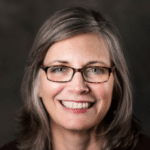
We do not approach the Middle Ages as one isolated period or one single culture. We put texts in conversation with one another so students can see how ideas move across time and how deeply medieval questions still shape the modern world.
Zoë Eisenman, AM’89 Director of Academics and Basic Program instructor
Learn more about the Graham School’s Middle Ages offerings.
No. All texts are read in modern English translation. The goal of these courses is direct engagement with the ideas and literary imagination of the period, not linguistic expertise.
No, the instructors provide historical context as needed, and courses are designed to be substantive entry points into the material.
The Middle Ages did not develop in isolation. Medieval writers often worked with classical sources, adapting older ideas for new questions and new contexts. Some courses also look forward to modern texts to show how medieval forms and ideas continue to influence literature, art, and popular culture.
Graham courses are discussion-based. Instructors provide some context and guide students in close reading, but the classroom is shaped by conversation. You will be invited to ask your own questions, test ideas with others, and build a deeper understanding of the texts through shared inquiry.
Graham non-credit courses do not include papers, tests, or grades. You participate for the love of learning and the opportunity to explore important works with an instructor and classmates.
Graham offers courses on the Middle Ages in a variety of formats, including online and in-person options. Check each course description for the meeting format, schedule, and location.
Complete the assigned reading and come prepared to participate in discussion. You do not need to arrive with all the answers. Graham courses are designed around shared inquiry, so your questions and observations are an important part of the classroom experience.

