Immerse Yourself in the Great Books
Explore timeless works of literature, philosophy, history, and social thought.

If you have ever been absorbed in a novel, unsettled by a poem, or stayed with a line of text long after finishing a book, you know how powerful the written word can be.
Studying literature at the Graham School offers the opportunity to explore enduring works with closer attention, examining how language, form, and imagination shape the way we understand ourselves and our world.
Our literature courses center on close reading and meaningful discussion. Guided by experienced instructors, you will engage directly with selected works, attending to language, structure, and meaning.
Our classes emphasize depth and interpretation, often focusing on a single author, a major work, a literary period, or a shared theme. We encourage students to return to passages, test ideas, and refine their thinking through conversation.

Explore timeless works of literature, philosophy, history, and social thought.

Elevate your critical thinking and leadership through advanced study in the liberal arts.


These literature courses span antiquity to the modern era and include a wide range of genres. Students may read epic poetry, tragedy, lyric verse, novels, and essays by a wide range of writers such as Homer, Sophocles, Virgil, Dante, Chaucer, Shakespeare, Austen, Dickens, Melville, Dostoyevsky, Tolstoy, Woolf, Joyce, Faulkner, Steinbeck, Baldwin, Ellison, Morrison, Nabokov, Cather, Eliot, Cervantes, Shelley, Rushdie, and McCarthy.
Guided by experienced instructors, students will consider how literary texts express and question values related to identity, morality, power, belief, freedom, and social life, gaining an understanding of distinctive literary moments as well as connections across periods and traditions.
Engaging with these texts can expand your understanding of the world and strengthen your critical thinking skills. The Great Books may come from very different times and places but they remain highly relevant to our lives because they address enduring questions about the most important things in human life.

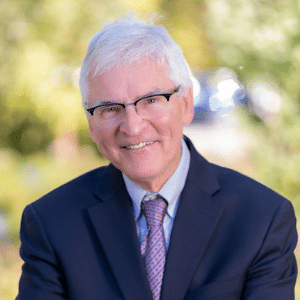









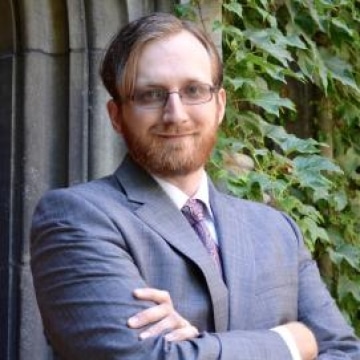


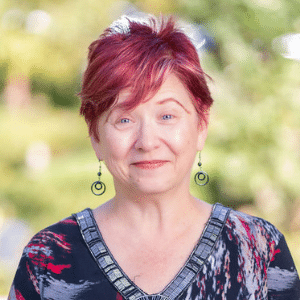


Participation with fellow lifelong learners, in deep discovery and discussion over the texts that have shaped our world feels like a weekly intellectual retreat directed by bright, generous and dedicated instructors.
Julie Conway, CER’21 (Basic Program)

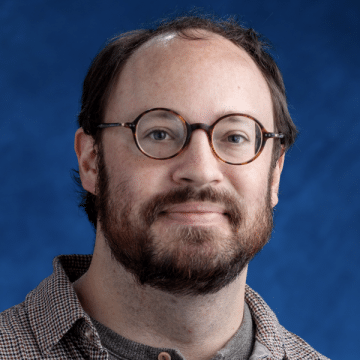
When you get a group of people together considering big questions and you allow for probing and interpretation and provide the structure to have unified, productive conversations, you enable people to work out their own ideas alongside one another. And, ultimately, that leads to ideas that none of us could have generated on our own.
Noah Chafets, AM’10, PhD’21 Cyril O. Houle Chair of the Basic Program

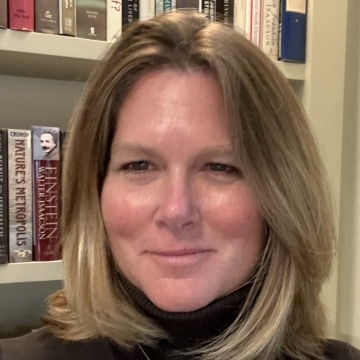
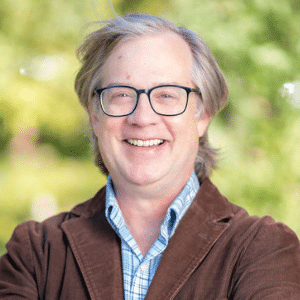
Studying literature allows us to step back and reflect on the values that shape our lives. Through close reading and discussion, we can see how writers across history have grappled with questions that still matter today.
Zoë Eisenman, AM’89 Director of Academics and Basic Program instructor
Learn more about the Graham School’s Great Books offerings.
Literature courses at Graham may include works by writers such as Homer, Sophocles, Virgil, Dante, Chaucer, Shakespeare, Austen, Dickens, Melville, Dostoyevsky, Tolstoy, Woolf, Joyce, Faulkner, Steinbeck, Baldwin, Ellison, Morrison, Nabokov, Cather, Eliot, Cervantes, Shelley, Rushdie, and McCarthy. Authors and texts vary by course, and offerings change regularly from quarter to quarter.
Our non-credit courses are intended for students at a variety of different levels. You will be encouraged to apply your unique perspective as you read these texts and engage with your peers. We offer an optional course to prepare students to engage with challenging works: How to Read Classic Texts. While this is presented as an introductory course for the Basic Program, students in other programs or open enrollment courses are also welcome to participate and grow their skills.
Yes. These non-credit courses are built for adults who have life experience and want to learn. Our instructors encourage all students to participate, regardless of their educational background, creating an inclusive learning environment with a collegial atmosphere.
The Graham School offers both online and in-person class experiences. The description for each course specifies whether it will be offered online through Canvas or in person at the Gleacher Center in downtown Chicago.
Students come to each session prepared to engage in lively, respectful discussions about the assigned reading. With a small group of peers and your instructor, you’ll examine fundamental questions through the lenses of multiple disciplines and lived experiences.
No application is required for Basic Program courses or open enrollment courses. There is a required application for the Master of Liberal Arts.
No. Graham literature courses are open to students from all academic and professional backgrounds.
All literature courses at Graham are discussion-based seminars.
Reading assignments vary by course; however, students should anticipate regular, thoughtful engagement with assigned texts, with an average of two to four hours of reading each week.
Kendall Sharp traces the Greek roots of civic virtue through Aristotle, Pericles, and Homer to reveal what self-government demanded of its citizens.

Bridging centuries of insight to understand our changing world.

A journey into Melville’s American epic and its enduring power.