

Program Overview
Continue to participate in our learning community by joining us for fascinating courses and exciting travel study opportunities.
The Basic Program of Liberal Education for Adults at the University of Chicago Graham School connects you with a community of lifelong learners, with whom you will read foundational texts and discuss the big ideas that have shaped our world. Our students enrich their adult lives by forming connections with peers who come from a wide range of backgrounds on a journey through the Great Books. Many are eager to expand on this unique intellectual experience by participating in additional programming while in the four-year program or after they have graduated.
That’s why the Graham School has developed these opportunities for continued learning:
- Alumni Courses
- Alumni Sequences
- Travel Study


As someone who is retired, if you sit down, you’re never going to get up. So, I like to keep myself moving forward and learning more about the world. I feel it’s important for me to encourage others to develop their critical thinking, their skills in terms of questioning and thinking about others and how they affect others. And these are all the things we learn in liberal arts.
Katherine Abbott MBA’97, CER’22 (Basic Program)

Attending the Basic Program has been the most intellectually rewarding experience of my life. I’m committed to life-long learning and expect to be engaged with the Basic Program for many years to come.
Donna Ioppolo CER ’93 (Basic Program)

Basic Program Alumni Courses
Each quarter, the Graham School offers stand-alone courses for students who have taken part in at least two years of the Basic Program. These courses cover a variety of topics in multiple disciplines, based on student requests and our instructors’ areas of scholarship and interest. By registering for Alumni Courses our Basic Program participants can continue to investigate complex ideas and engage in thoughtful discussions without committing to a full two-year sequence.
Explore Upcoming Courses





Basic Program Alumni Sequences
We offer Alumni Sequences for students who have completed at least two years of the Basic Program Core Curriculum.
These two-year, curated courses of study center on a specific era or culture, incorporating a variety of texts that deepen the conversations begun in the Core Curriculum. Alumni Sequences offer students the same cohort experience as the Core Curriculum.
Upcoming Sequence:
The Modern Tradition
Prerequisite: Completion of two years of the Basic Program
Next Opportunity for Entry: Autumn 2025
Modernity is characterized by the emergence of an entirely new form of consciousness, one that is critical, uprooted, autonomous, and intensely self-reflexive. This two-year sequence is an exploration of the “modern tradition” through classic texts of the modern period (1750 through the middle of the twentieth century) in conversations with earlier classical and premodern sources.
This two- year Alumni Sequence begins by examining “the discovery of the individual” around the early fifteenth century as an unprecedented social and political fact. But what kind of discovery is this? What does it mean to be individual? This sequence will discuss several major philosophers and social theorists and what is perhaps the supreme literary treatment of the role of memory in the construction of the self: Proust’s Swann’s Way.
The texts explored in this sequence include:
Year 1
Autumn
| Week | Seminar |
|---|---|
| 1-3 | Rousseau, The Social Contract |
| 4-5 | Hegel, Introduction to the Philosophy of History |
| 6-7 | Tolstoy, “The Death of Ivan Ilych” |
| 8-10 | Heidegger, Being and Time (selections) |
| Week | Tutorial |
|---|---|
| 1-10 | Proust, Swann’s Way |
Winter
| Week | Seminar |
|---|---|
| 1 | Aristotle, Politics (selections) |
| 2-4 | Weber, The Protestant Ethic and the Spirit of Capitalism |
| 5-6 | Dostoevsky, Notes from Underground |
| 7-10 | Steinbeck, The Grapes of Wrath |
| Week | Tutorial |
|---|---|
| 1-5 | Marx, The Marx-Engels Reader (selections) |
| 6-10 | Hayek, The Road to Serfdom |
Spring
| Week | Seminar |
|---|---|
| 1-2 | DuBois, The Souls of Black Folk |
| 3-4 | Ortega, The Revolt of the Masses |
| 5-8 | Ellison, Invisible Man |
| 9-10 | Faulkner, “The Bear” |
| Week | Tutorial |
|---|---|
| 1-10 | Modern poetry |
Year 2
Autumn
| Week | Seminar |
|---|---|
| 1 | Luther, “The Freedom of a Christian” |
| 2 | Luther, “The Bondage of the Will” |
| 3 | Genesis + Kierkegaard, Fear and Trembling |
| 4-6 | Kierkegaard, Fear and Trembling |
| 6-8 | Freud, The Future of an Illusion |
| 9-10 | Tillich, The Courage to Be |
| Weel | Tutorial |
|---|---|
| 1-8 | Dostoyevsky, The Idiot |
| 9-10 | O’Connor, The Violent Bear It Away |
Winter
| Week | Seminar |
|---|---|
| 1-2 | Presocratics |
| 3-5 | Shelley, Frankenstein |
| 6-8 | Darwin, The Descent of Man (selections) |
| 9-10 | Kuhn, The Structure of Scientific Revolutions |
| Week | Tutorial |
|---|---|
| 1-6 | Einstein, The Theory of Relativity |
| 7-10 | Heisenberg, Physics and Philosophy |
Spring
| Week | Seminar |
|---|---|
| 1-3 | Nietzsche, Beyond Good and Evil (selections) |
| 4-6 | Simone de Beauvoir, The Second Sex (selections) |
| 7-8 | Fanon, Black Skin, White Masks (selections) |
| 9-10 | Berlin, “Two Concepts of Liberty” |
| Week | Tutorial |
|---|---|
| 1-2 | Ibsen, “The Wild Duck” |
| 3-4 | Chekhov, “Three Sisters” |
| 5 | Pirandello, “Six Characters in Search of an Author” |
| 6-7 | Brecht, “Mother Courage and her Children” |
| 8-9 | O’Neill, “Long Day’s Journey into Night” |
| 10 | Beckett, “Happy Days” |
Future Alumni Sequence:
The Middle Ages
Next opportunity for entry: Autumn 2026
Since the invention of the term medieval to name the interval between Classical Antiquity and the “rebirth” of the Renaissance, the Middle Ages have often been associated with benightedness: violence and repression, backwardness and ignorance. But this interval—of over ten centuries—is a vast and complex historical period that includes the transmission and transformation of classical thought as well as discontinuity with it; rationalism, skepticism, and mysticism as well as religious dogma; cultural contact and exchange as well as aggression and intolerance; and intense interest in subjectivity and personal experience even in the context of powerful institutions.
In this two-year Alumni Sequence, we will read some of the greatest works of the Middle Ages from a variety of cultures, in conversation with texts produced before and after them, in an effort to develop a sense of the richness and relevance of “the medieval.”
The texts explored in this sequence include:
Year 1
Autumn
| Week | Seminar |
|---|---|
| 1-2 | Paul, 1 Corinthians |
| 3-5 | Plotinus, Enneads |
| 6-7 | Beowulf |
| 8-10 | Sir Gawain and the Green Knight |
| Week | Tutorial |
|---|---|
| 1-10 | Augustine, City of God |
Winter
| Week | Seminar |
|---|---|
| 1-3 | Aristotle, De Anima |
| 4-5 | Ibn Tufayl, Hayy bin Yaqzan |
| 6-7 | Averroes, The Incoherence of the Incoherence |
| 8-10 | Aquinas, Summa Contra Gentiles |
| Week | Tutorial |
|---|---|
| 1-3 | The Song of Roland |
| 4-7 | Ibn Munqidh, The Book of Contemplation |
| 8-10 | Villehardouin, The Conquest of Constantinople |
Spring
| Week | Seminar |
|---|---|
| 1-3 | Piers Plowman |
| 4 | Everyman, The Second Shepherds’ Play |
| 5-7 | Spenser, The Faerie Queene |
| 8-10 | Poe and Hawthorne, selected stories |
| Week | Tutorial |
|---|---|
| 1-5 | Boccaccio, Decameron |
| 6-10 | Icelandic Sagas |
Year 2
Autumn
| Week | Seminar |
|---|---|
| 1 | The Rule of St. Benedict |
| 2-4 | Boethius, The Consolation of Philosophy |
| 5-7 | Hildegard von Bingen, Scivias |
| 8-10 | Maimonides, The Guide of the Perplexed |
| Week | Tutorial |
|---|---|
| 1-10 | Dante, Purgatorio |
Winter
| Week | Seminar |
|---|---|
| 1-2 | The Letters of Abelard and Heloise |
| 3 | Bernard of Clairvaux, Sermons on the Song of Songs |
| 4-5 | Rumi, selected poems |
| 6-7 | Petrarch, selected poems |
| 8-10 | Nabokov, Lolita |
| Week | Tutorial |
|---|---|
| 1-8 | De Lorris and de Meun, The Romance of the Rose |
| 9-10 | Christine de Pizan, The Book of the City of Ladies |
Spring
| Week | Seminar |
|---|---|
| 1-4 | The Arabian Nights |
| 5-6 | Marco Polo, The Description of the World |
| 7-8 | Olaudah Equiano, The Interesting Narrative |
| 9-10 | Calvino, Invisible Cities |
| Week | Tutorial |
|---|---|
| 1-10 | Chaucer, The Canterbury Tales |
Future Alumni Sequence:
The American Tradition
Next opportunity for entry: Autumn 2027
From its founding—and even before—America was as much a contested ground of ideals as it was a geographic region or state. Democracy, religious freedom, the pursuit of individual happiness, self-reliance, and perhaps above all liberty: America’s history is the history of struggles over the meaning and implications of these ideals and their collision with American realities like the destruction of native populations, slavery, the exclusion of minorities, the marginalization of women, the excesses of capitalism, and a culture of consumption. In this two-year Alumni Sequence, we will explore all of these issues as we try to understand what America really is and what it aspires to be.
The texts explored in this sequence include:
Year 1
Autumn
| Week | Seminar |
|---|---|
| 1-3 | Bradford, Of Plymouth Plantation |
| 4 | Kandiaronk in Lahontan, “Dialogue on Religion” |
| 5-6 | Edwards, Sermons |
| 7-8 | Franklin, Autobiography |
| 8-10 | Hawthorne, The Scarlet Letter |
| Week | Tutorial |
|---|---|
| 1-10 | The Federalist and Anti Federalist Papers |
Winter
| Week | Seminar |
|---|---|
| 1-4 | Emerson, Essays |
| 5-6 | Bhagavad Gita |
| 7-10 | Thoreau, Walden |
| Week | Tutorial |
|---|---|
| 1-10 | Tocqueville, Democracy in America |
Spring
| Week | Seminar |
|---|---|
| 1-2 | De las Casas, Brief Account of the Destruction of the Indies |
| 3-4 | Bradstreet and Wheatley, poems |
| 5-6 | Douglass, Narrative |
| 7-10 | Whitman, Leaves of Grass |
| Week | Tutorial |
|---|---|
| 1-10 | Lincoln speeches, Lincoln-Douglas debates |
Year 2
Autumn
| Week | Seminar |
|---|---|
| 1-2 | Dickinson, poems |
| 3-4 | Grant, Memoirs (sel.) |
| 5-7 | Crane, The Red Badge of Courage |
| 8-10 | Twain, Huckleberry Finn |
| Week | Tutorial |
|---|---|
| 1-10 | Melville, Moby-Dick |
Winter
| Week | Seminar |
|---|---|
| 1-3 | James, Pragmatism |
| 4-6 | Adams, Education of Henry Adams (sel.) |
| 7-8 | Supreme Court decisions |
| 9-10 | Hurston, Their Eyes Were Watching God |
| Week | Tutorial |
|---|---|
| 1-10 | American short stories (Poe, Singer, James, Hemingway, Faulkner, O’Connor) |
Spring
| Week | Seminar |
|---|---|
| 1-2 | Cather, Death Comes for the Archbishop |
| 3 | Stevens, poems |
| 4-5 | Baldwin, The Fire Next Time |
| 6-7 | Wilson, Fences |
| 8-10 | Niebuhr, The Irony of American History |
| Week | Tutorial |
|---|---|
| 1-10 | McCarthy, Blood Meridian |
The Romans
Next opportunity for entry: Autumn 2028
Corrupt politicians, scandalous celebrities, aggressive foreign policy, upheavals in cultural ideas about sexuality and marriage, income inequality, immigration problems, concerns about the justice system – these were also pressing issues for the Ancient Romans. Roman texts and ideas have been influential throughout subsequent history, but they are particularly relevant for Americans given their influence on the Founding Fathers and the comparisons between the Roman Empire and modern America. This two-year Alumni Sequence will place the literature, philosophy, and history of Ancient Rome in conversation with other classic texts as we seek to understand these resonances.
The texts explored in this sequence include:
Year 1
Autumn
| Week | Seminar |
|---|---|
| 1-2 | Plutarch, Lives; Theseus, Romulus (plus comparison), Marius and Sulla |
| 3-4 | Sallust, Jugurthine War |
| 5-10 | Machiavelli, Discourses |
| Week | Tutorial |
|---|---|
| 1-10 | Livy, History Books 1-5 |
Winter
| Week | Seminar |
|---|---|
| 1-2 | Catullus, selected poems |
| 3-4 | Virgil Eclogues & Georgics |
| 5-6 | Horace, selected poems |
| 7-10 | Ovid, Metamorphoses |
| Week | Tutorial |
|---|---|
| 1 | Plutarch, Life of Cicero |
| 2-3 | Cicero, Against Verres, 4th Philippic |
| 4-5 | Cicero, Pro Caelio |
| 6-8 | Cicero, On Duties |
| 9-10 | Petrarch, Letters to Cicero |
Spring
| Week | Seminar |
|---|---|
| 1-4 | Apuleius, The Golden Ass |
| 5-6 | Plautus, Menaechmi |
| 7 | Euripides, Hippolytus |
| 8-9 | Seneca, Phaedra |
| 10 | Racine, Phèdre |
| Week | Tutorial |
|---|---|
| 1-5 | Polybius, The Histories (selections) |
| 6-10 | Montesquieu, Consideration on the Causes for the Greatness of the Romans and Their Decline |
Year 2
Autumn
| Week | Seminar |
|---|---|
| 1-5 | Lucan, Pharsalia |
| 6-7 | Shakespeare, Julius Caesar |
| 8-9 | Thomas Paine, Common Sense |
| 10 | Lincoln, Cooper Union Address |
| Week | Tutorial |
|---|---|
| 1-8 | Petronius, Satyricon |
| 9-10 | Fitzgerald, The Great Gatsby |
Winter
| Week | Seminar |
|---|---|
| 1-3 | Epictetus, Handbook and Discourses |
| 4 | Marcus Aurelius, Meditations |
| 5-7 | Seneca, On Mercy |
| 8-10 | Vonnegut, Slaughterhouse Five |
| Week | Tutorial |
|---|---|
| 1-2 | Hippocratic Writings |
| 3-4 | Vitruvius, On Architecture |
| 5-7 | Pliny the Elder, Natural History |
| 8-9 | Galen, On the Natural Faculties |
| 10 | Bacon, The Great Instauration and Novum Organum (Book 1) |
Spring
| Week | Seminar |
|---|---|
| 1-5 | Tacitus, Annals |
| 6 | Gospel of Luke |
| 7-8 | Acts of the Apostles |
| 9-10 | Paul, Epistle to the Romans |
| Week | Tutorial |
|---|---|
| 1-10 | Gibbon, History of the Decline and Fall of the Roman Empire (Selections) |
The Asian Classical Tradition
Next Opportunity for Entry: Autumn 2029
This sequence introduces Basic Program students to the literary cultures of Asia, using carefully selected English translations of texts from the Sanskrit, Pali, Persian, Arabic, Chinese, and Japanese traditions. “Asian” is an admittedly imprecise term: this roster of traditions is far from exhaustive, and its historical impact reaches deep into Africa and Europe as well.
We approach these non-Western literary classics in the same spirit and with the same methods as in the four-year Core Curriculum, emphasizing close reading and Socratic conversation, and following the fascinating threads that connect these texts together. The introduction of several new classical traditions into the mix means that instructors will spend more time on historical and contextual background, but the focus will remain on lively engagement with the texts.
Beyond classical works of narrative and poetry, the sequence also features a range of religious, philosophical, and historical materials—Hindu, Buddhist, Islamic, Confucian, and Daoist—which we will approach not just in their own terms but also as products of their respective literary cultures.
The texts explored in this sequence include:
Year 1
Autumn
| Week | Seminar |
|---|---|
| 1-4 | Rig Veda (selections) |
| 5-7 | Upanishads (selections) |
| 8-10 | Bhagavad Gita in the Mahabharata |
| Week | Tutorial |
|---|---|
| 1-10 | Mahabharata |
Winter
| Week | Seminar |
|---|---|
| 1-6 | Life of the Buddha (Buddhacarita) |
| 7 | Questions of King Milinda (Milinda Panha) (Selections) |
| 8-10 | Dhammapada |
| Week | Tutorial |
|---|---|
| 1-5 | Ramayana |
| 6-10 | Shahnameh |
Spring
| Week | Seminar |
|---|---|
| 1-2 | Al-Shafi’i, Epistle on Legal Theory (Risalah) (selections) |
| 3-5 | Ibn Tufayl, Hayy ibn Yaqzan |
| 6-7 | Nizami, Layli and Majnun |
| 9-10 | Attar, The Conference of the Birds |
| Week | Tutorial |
|---|---|
| 1-10 | Ibn Khaldun, The Muqaddimah: An Introduction to History |
Year 2
Autumn
| Week | Seminar |
|---|---|
| 1-5 | Confucius, Analects (selections) |
| 6-10 | Mengzi (selections) |
| Week | Tutorial |
|---|---|
| 1-10 | Three Kingdoms: A Historical Novel |
Winter
| Week | Seminar |
|---|---|
| 1 | Heart Sutra |
| 2-6 | Nagarjuna, Fundamental Verses on the Middle Way |
| 7-9 | Hakuin, Commentary on the Heart Sutra |
| 10 | Chomei, Hojoki |
| Week | Tutorial |
|---|---|
| 1-5 | Laozi, Daodejing (selections) |
| 6-10 | Zhuangzi (selections) |
Spring
| Week | Seminar |
|---|---|
| 1-3 | Lotus Sutra (selections) |
| 4-6 | Dogen, Shobogenzo (selections) |
| 7-10 | Chinese Poetry |
| Week | Tutorial |
|---|---|
| 1-10 | Lady Murasaki, The Tale of Genji |
Future Alumni Sequence:
The Romans
Next opportunity for entry: Autumn 2028
Corrupt politicians, scandalous celebrities, aggressive foreign policy, upheavals in cultural ideas about sexuality and marriage, income inequality, immigration problems, concerns about the justice system – these were also pressing issues for the Ancient Romans. Roman texts and ideas have been influential throughout subsequent history, but they are particularly relevant for Americans given their influence on the Founding Fathers and the comparisons between the Roman Empire and modern America. This two-year Alumni Sequence will place the literature, philosophy, and history of Ancient Rome in conversation with other classic texts as we seek to understand these resonances.
The texts explored in this sequence include:
Year 1
Autumn
| Week | Seminar |
|---|---|
| 1-2 | Plutarch, Lives; Theseus, Romulus (plus comparison), Marius and Sulla |
| 3-4 | Sallust, Jugurthine War |
| 5-10 | Machiavelli, Discourses |
| Week | Tutorial |
|---|---|
| 1-10 | Livy, History Books 1-5 |
Winter
| Week | Seminar |
|---|---|
| 1-2 | Catullus, selected poems |
| 3-4 | Virgil Eclogues & Georgics |
| 5-6 | Horace, selected poems |
| 7-10 | Ovid, Metamorphoses |
| Week | Tutorial |
|---|---|
| 1 | Plutarch, Life of Cicero |
| 2-3 | Cicero, Against Verres, 4th Philippic |
| 4-5 | Cicero, Pro Caelio |
| 6-8 | Cicero, On Duties |
| 9-10 | Petrarch, Letters to Cicero |
Spring
| Week | Seminar |
|---|---|
| 1-4 | Apuleius, The Golden Ass |
| 5-6 | Plautus, Menaechmi |
| 7 | Euripides, Hippolytus |
| 8-9 | Seneca, Phaedra |
| 10 | Racine, Phèdre |
| Week | Tutorial |
|---|---|
| 1-5 | Polybius, The Histories (selections) |
| 6-10 | Montesquieu, Consideration on the Causes for the Greatness of the Romans and Their Decline |
Year 2
Autumn
| Week | Seminar |
|---|---|
| 1-5 | Lucan, Pharsalia |
| 6-7 | Shakespeare, Julius Caesar |
| 8-9 | Thomas Paine, Common Sense |
| 10 | Lincoln, Cooper Union Address |
| Week | Tutorial |
|---|---|
| 1-8 | Petronius, Satyricon |
| 9-10 | Fitzgerald, The Great Gatsby |
Winter
| Week | Seminar |
|---|---|
| 1-3 | Epictetus, Handbook and Discourses |
| 4 | Marcus Aurelius, Meditations |
| 5-7 | Seneca, On Mercy |
| 8-10 | Vonnegut, Slaughterhouse Five |
| Week | Tutorial |
|---|---|
| 1-2 | Hippocratic Writings |
| 3-4 | Vitruvius, On Architecture |
| 5-7 | Pliny the Elder, Natural History |
| 8-9 | Galen, On the Natural Faculties |
| 10 | Bacon, The Great Instauration and Novum Organum (Book 1) |
Spring
| Week | Seminar |
|---|---|
| 1-5 | Tacitus, Annals |
| 6 | Gospel of Luke |
| 7-8 | Acts of the Apostles |
| 9-10 | Paul, Epistle to the Romans |
| Week | Tutorial |
|---|---|
| 1-10 | Gibbon, History of the Decline and Fall of the Roman Empire (Selections) |
Future Alumni Sequence:
Asian Classical Traditions
Next Opportunity for Entry: Autumn 2029
This sequence introduces Basic Program students to the literary cultures of Asia, using carefully selected English translations of texts from the Sanskrit, Pali, Persian, Arabic, Chinese, and Japanese traditions. “Asian” is an admittedly imprecise term: this roster of traditions is far from exhaustive, and its historical impact reaches deep into Africa and Europe as well.
We approach these non-Western literary classics in the same spirit and with the same methods as in the four-year Core Curriculum, emphasizing close reading and Socratic conversation, and following the fascinating threads that connect these texts together. The introduction of several new classical traditions into the mix means that instructors will spend more time on historical and contextual background, but the focus will remain on lively engagement with the texts.
Beyond classical works of narrative and poetry, the sequence also features a range of religious, philosophical, and historical materials—Hindu, Buddhist, Islamic, Confucian, and Daoist—which we will approach not just in their own terms but also as products of their respective literary cultures.
The texts explored in this sequence include:
Year 1
Autumn
| Week | Seminar |
|---|---|
| 1-4 | Rig Veda (selections) |
| 5-7 | Upanishads (selections) |
| 8-10 | Bhagavad Gita in the Mahabharata |
| Week | Tutorial |
|---|---|
| 1-10 | Mahabharata |
Winter
| Week | Seminar |
|---|---|
| 1-6 | Life of the Buddha (Buddhacarita) |
| 7 | Questions of King Milinda (Milinda Panha) (Selections) |
| 8-10 | Dhammapada |
| Week | Tutorial |
|---|---|
| 1-5 | Ramayana |
| 6-10 | Shahnameh |
Spring
| Week | Seminar |
|---|---|
| 1-2 | Al-Shafi’i, Epistle on Legal Theory (Risalah) (selections) |
| 3-5 | Ibn Tufayl, Hayy ibn Yaqzan |
| 6-7 | Nizami, Layli and Majnun |
| 9-10 | Attar, The Conference of the Birds |
| Week | Tutorial |
|---|---|
| 1-10 | Ibn Khaldun, The Muqaddimah: An Introduction to History |
Year 2
Autumn
| Week | Seminar |
|---|---|
| 1-5 | Confucius, Analects (selections) |
| 6-10 | Mengzi (selections) |
| Week | Tutorial |
|---|---|
| 1-10 | Three Kingdoms: A Historical Novel |
Winter
| Week | Seminar |
|---|---|
| 1 | Heart Sutra |
| 2-6 | Nagarjuna, Fundamental Verses on the Middle Way |
| 7-9 | Hakuin, Commentary on the Heart Sutra |
| 10 | Chomei, Hojoki |
| Week | Tutorial |
|---|---|
| 1-5 | Laozi, Daodejing (selections) |
| 6-10 | Zhuangzi (selections) |
Spring
| Week | Seminar |
|---|---|
| 1-3 | Lotus Sutra (selections) |
| 4-6 | Dogen, Shobogenzo (selections) |
| 7-10 | Chinese Poetry |
| Week | Tutorial |
|---|---|
| 1-10 | Lady Murasaki, The Tale of Genji |

Travel Study Open to Basic Program Alumni
By participating in travel study, Basic Program students and alumni can continue to engage with their instructors and peers while exploring the real-world sites of revolutions in thought and culture. Each Spring Quarter, students in the Basic Program have the opportunity to join a trip to Greece. During this immersive experience students visit museums and archaeological sites, walking in the footsteps of the authors they have read and discussed in class.
Learn more about our upcoming Greece trip and other travel study opportunities offered by the Graham School.
Basic Program Stories

New Scholarship Program Honors David and Peggy Bevington
How a Lifelong Commitment to the Liberal Arts Continues to Inspire Students and Shape Future Generations

Classic Texts, Contemporary World: A New Initiative Bridges Past and Present
Bridging centuries of insight to understand our changing world.
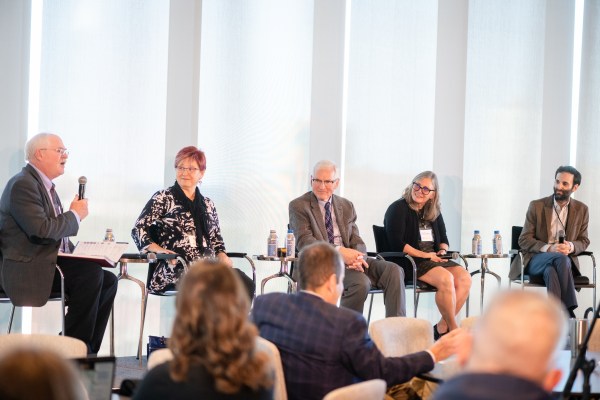
Coming Together: Basic Program Faculty Reflect on Purpose and Pedagogy
Instructors in the Basic Program of Liberal Education for Adults gathered this past August for their first retreat in seven years.