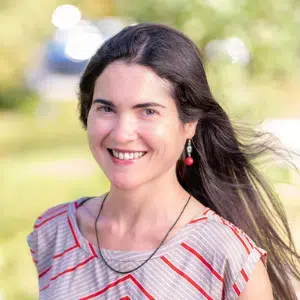
In this conversation, journalist, author, and educator Lucy Kellaway discussed midlife transition, lifelong learning, and her book Re-Educated. Kellaway reflected on her decision to leave a 30-year career at the Financial Times to retrain as a secondary school teacher and cofound NowTeach, a charity supporting older professionals entering the classroom.
The conversation explored what it means to become a beginner again, with Kellaway emphasizing the often-overlooked work of “unlearning” habits, confidence, and status built over decades. She spoke candidly about motivation, humility, and the importance of aligning personal fulfillment with purposeful work. Drawing on her own experience and those she has guided, Kellaway offered a thoughtful framework for navigating reinvention deliberately rather than impulsively. The dialogue affirmed the Graham School’s commitment to exploring how learning can remain vital, challenging, and transformative at every stage of life.
Lecturer bio:
For over 30 years Lucy Kellaway was a journalist on the Financial Times where she wrote award winning columns skewering management practices, interviewed captains of industry and invented the cult fictional character, Martin Lukes. In 2016 she co-founded Now Teach, a charity to persuade older professionals to retrain as teachers in challenging schools. In 2017 she quit the FT to become a teacher in a comprehensive school in Hackney, where she now teaches economics. She still writes regularly for the FT and elsewhere and broadcasts on the BBC on educational matters. Kellaway was on the board of Admiral plc for 9 years, and is a trustee of FLIC, a campaign to improve financial literacy. She was appointed Officer of the Order of the British Empire (OBE) in the 2021 Birthday Honours for services to education.
Transcript:
Seth Green: Welcome to everyone who has joined us. We are thrilled to have you here for our Morning in Chicago and Evening in London conversation with Lucy Kellaway about her book, Re-Educated, and about her ideas on midlife transition.
I’m Seth Green, and on a morning like this one, I’m especially grateful to say I’m the dean here at the Graham School at the University of Chicago. Welcome to our campus in winter. It is no longer this snowy, but it was just a few days ago, and so you’ll get a taste of the wonderful cold that is taking over our town this time of year.
For more than 130 years, as many of you know, because I see many familiar faces, the Graham School has been the trailblazer in lifelong learning, inviting people of all ages and stages into learning across their lives using the distinct traditions of the University of Chicago.
And we are thrilled to be starting our winter quarter, and classes just began on Monday, and I’ve already heard a lot of excitement from students who are in them in record numbers. We saw a 30-plus percent increase in open enrollment this year versus last year, and are just ecstatic to have so many more people joining our community every day and engaging in the big ideas that animate this university. I will also mention that we have many upcoming events in the month that is coming.
We, next week, are going to have a discussion with our Director of the Graduate Student at Large program, which is an opportunity to study across all of the disciplines at the university. We are going to have a discussion the following week about a new book Reader Bot, and it is about AI, and how to understand its impact on reading, and why that matters. And then we will have an information session also that week on our new program this summer.
With the growing school, we decided that we were going to initiate Graham Summer School, a chance to be in residence with your fellow learners on campus. For a week here in Hyde Park, and to take a class that is on civic virtue at 250. It is a special offering that we are timing with the anniversary of the country, and will allow you to read the foundational texts that have influenced civic virtue, and then discuss how those values are today, as well as have many experiences out and around in our city, where these virtues and values are embedded into our community. And then finally, I will just mention that registration is open for that summer school, should you want to get a jump start on it.
All right, that is all for the introductions. You are all here for a very specific reason, and that is to learn from our amazing guest, Lucy Callaway, so I will add her on screen here so you can all see her. And let me just briefly introduce Lucy. For over 30 years, Lucy was a journalist on the Financial Times, where she wrote award-winning columns skewering management practices
She interviewed captains of industry and invented the cult fictional character Martin Lukes. In 2016, she co-founded NowTeach, a charity to persuade older professionals to retrain as teachers in challenging schools.
And in 2017, she quit the FT to become a teacher in a comprehensive school herself, where she now teaches economics. She still writes regularly for the FT, and elsewhere, and broadcasts on the BBC on educational matters. And we are thrilled to have her here as we continue to learn how individuals can potentially navigate the longer lives that we now enjoy. And so.
Lucy, before we jump into some of your advice, I guess it would be wise to start with your original decision. You had a dream job, a prestigious column at the Financial Times. People can only imagine the chance to score people in public on a regular basis and have fun doing so. So tell us about the moment you realized that your comfortable life no longer suited you.
Made you pursue a new chapter? And was there a tipping point that led you to begin this midlife transition?
Lucy Kellaway: Well, you’re right, Seth. I mean, I had the cushiest job in the world. Can you imagine? I mean, if you would permit a little tiny swear word, the corporate world is up to here in bullshit.
Seth Green: It was my job to call that out. I never ran out of stuff to write about, and…
Lucy Kellaway: Readers loved it. Why? Because they were drowning in it too. Right. This was a job that I absolutely loved. It was a job that I could manage all the other things in my life with. Why on earth would I consider leaving? Well, I mean, I guess there are a couple of answers to that. First of all, I’d been at the FT for over 30 years.
Seth Green: Yeah.
Lucy Kellaway: Over 30 years, I mean, that is such a long time. And you kind of begin to think, oh, I wonder if there’s anything that exists out of that, but there’s that. But the other thing is that the me in my late 50s was very, very different to the young interloper who joined the FT thinking, wow, I can’t believe I’m on the Financial Times in my 20s. And the things that I wanted then, I think I wanted fun, I wanted glamour, I loved the idea of my name in the paper. I wanted to be as unlike my mum, who was a schoolteacher, by the way, as humanly possible. But me, in my late 50s, was a very, very different kettle of fish. I mean, I…didn’t find it glamorous, and I thought, I mean, I’m not very glamorous, I didn’t find it glamorous. I…I was ever so slightly bored, am I allowed to say that? You know, I wasn’t…
Seth Green: Are you allowed to say that? I mean, there’s only so much BS that you can call out before it maybe feels like it’s just deja vu.
Lucy Kellaway: Absolutely right. I wasn’t getting any better. Yeah. I suspect I was getting slightly worse. And I was kind of thinking, is there anything out there? But you asked, was there a little tipping, was there a trigger?
Seth Green: Yeah.
Lucy Kellaway: I think the trigger really… there were two triggers. There was the first trigger when my mum died, because my mum was a schoolteacher. She died about 10, 12 years before I took the plunge.
Seth Green: Yeah.
Lucy Kellaway: With my mum dead, I thought, do I need to replace her now? Shall I become a teacher? I was then in my late 40s, and I thought, no, I’m too old, I’ve missed that boat. And in any case, I needed the money from the FT, I needed a whole lot of things. Ten years later, my dad dies. I had been looking after him, and I suddenly thought, I’m free. I’m free. I can do whatever I like now. Yeah.
I mean, people say it’s bad to make a decision when you’re bereaved. I’m not sure about that. I think it can be the other way around, that the shock of bereavement means that you see things quite clearly. And your dad was in his early 90s when I died, so I didn’t think, oh god, it’s my turn next. I thought I’ve got decades left.
Seth Green: Yeah. See, I’m not too old. I’ve got masses of time. So I kind of thought, right, it’s now or never. I marched in to see the editor of the FT and said.
Lucy Kellaway: I’m out. Not immediately, I need to sort myself out, I need to get a job, I’ve got various other things I want to do, but… 9 months, I’ll be gone. And I was.
Seth Green: Well, so let’s talk about where you went. So, how did you come to teaching specifically, and how did you identify what you wanted to pursue and the way you wanted to pursue it? Because, you know, your mom was in it, and you can have fantasies, but it can be really hard to figure out reality, and there are big barriers, which we’ll talk about, so it’s not a small decision to just go after a new shiny possibility in midlife when you’ve already established yourself, and there’s a different set of consequences than, you know, when you’re maybe fumbling through your early 20s.
Lucy Kellaway: Yeah, absolutely right. I mean, I didn’t just think, okay, I’m off, let’s do it. I… I guess I had been feeling more and more restless and slightly bored and slightly stuck for some time. Yeah. But why teaching? Well, there were a couple of things. First of all, as I said, my mum was a teacher, but much more to the point, my daughter left university, and she joined something in the UK called Teach First, which was a kind of rip-off of Teach for America, which gets these young, idealistic kids out of college to teach in challenging schools the first term of my daughter’s professional life, where she was really struggling, and she was really struggling to do something important. And I felt almost jealous of my daughter. I mean, not quite jealous, I mean, I felt so admiring of her, and I thought.
She was also talking to me about this huge shortage of teachers. Yeah. Well, maybe I could do that too. And I called up the, education department and said, you know, I’m 57, am I too old? And they said, no, no, no, we don’t have a too old. And I then thought, well, not only do I want to do this, but I’m gonna set up something that’s like as it were, a Teach for America, like, teach first in reverse. Let’s call it.
Seth Green: Yup.
Lucy Kellaway: Let’s set up this scheme for all of those people like me, all of those bored investment bankers and corporate lawyers and other FT readers who, like me, want to do something useful at the end of their careers. So,
I think I was just fired up on thinking, this is a brilliant idea. And the people who I met who thought, that’s a terrible idea, made me even keener to give it a go. So that’s what I did.
Seth Green: Well, so, let’s talk about how you approach this. And one really interesting theme in your book, which I recommend to everyone here, is that you write about having to unlearn old habits before learning new ones. And so, first let’s talk about why. Why is letting go so important before embracing what’s next? And then, what proved the hardest for you to unlearn
From your decades of leadership at the Financial Times, and what surprised you most about becoming a beginner again?
Lucy Kellaway: Yeah, okay, so there’s lots of stuff in there, but first of all, the question of unlearning. That’s not something that anyone talks about. You’re kind of led to expect that if you switch, you’ve got all this experience, you’ve got… you’ve learned all of these…
you know, human skills that surely will stand you in good stead. Well, of course, that is true, but that’s all quite easy, because they’re things you’ve already acquired. What is so much harder is unlearning them. And so,
I guess writing to FT, audiences… I mean, they’re both… teaching and journalism are both about communication, but it’s completely upside down, so FT audiences are sort of…educated, knowledgeable, quite showy-offy, so pitching yourself quite high, you’re getting it right. You know, and if you write really dumb for an FT audience, they’re not going to be pleased. So you’ve really got to unlearn that. You’ve got to get your head around the fact that if you’re teaching in the sort of school that I I was teaching in. A bottom-set maths class does not understand that a half is bigger than a fifth, say.
Seth Green: Yeah.
Lucy Kellaway: So, immediately, you’ve got a different worldview. That’s… but that stuff, okay, you can get your head around. Much harder than that is the kind of… arrogance and confidence that comes from doing a job that you’ve been doing for a long time, and therefore you will be reasonably good at it. So there’s a sort of proficiency that you carry with you. When you then go into a job that you’re absolutely useless at, which every new teacher is useless, you have to sort of unlearn that confidence, almost. You have to be miles more humble
You have to… so at the FT, by the end, if one of our sub-editors wanted to change a column. sorry, a comma in my thing. They’d have to sort of say, look, I really think you’re missing a comma. And so you have to just forget about all of that, and think, I am really bad at this job, I’m a complete beginner, nobody has any respect for me whatsoever. have to forget that, start from the beginning, and start to earn it. quite hard. It really is quite hard.
Seth Green: I’ll just point out, Lucy, there are two upsides. I mean, you were describing, as you were finishing at the FT, maybe even in a bit of a decline, right? And obviously, that’s because you were as confident as you could be.
You didn’t want anyone to touch your commas, but it also meant you weren’t necessarily gaining new knowledge because you weren’t open to it. And so now you’re describing a place where you are useless, but obviously that means there’s a lot of learning that can take place because, you know, your convergence to the people around you actually includes a lot of learning and growth.
Right? And so, I just show that as a way to think about it, because we often talk within Leadership and Society Initiative here about traveling lightly and becoming a beginner again, and you need to let go of your baggage in order to accumulate a whole new set of wardrobes for the next act and the next person that you’re going to be, but that is not necessarily a loss, it’s a chance to gain new clothing, but in order to do that, you need to let go, and then you have the chance to grow. So I just think it’s a great analogy as we think about your experience.
Lucy Kellaway: Yeah, I think that is absolutely right, and in the end, or even right from the beginning, it is a massive positive. It’s a massive positive. I mean, I don’t think I was unusual to find myself in my late 50s and then early 60s, being amazed that I was learning so much new all the time.
Seth Green: And…
Lucy Kellaway: All of the other people, all of the other teachers, older teachers who started through NowTeach, they all felt the same. And, you know, I mean, I used to laugh at management consultants and their stupid learning curves, but I was living the learning curve, and I was right at the beginning of it all over again, and every day, every lesson, I was learning things. And what an amazing feeling. What an amazing feeling.
Seth Green: Well, so you’re now a decade in, and so, you have not only done this yourself, but you have seen a lot of other professionals who are coming in to now teach. And who are making similar leaps, and in your book, you know, you observe patterns of what you’ve seen work in major midlife reinvention. You’ve also looked at what may not, and so I’m curious if you could talk now on a more general level about what are some of the tips and tricks that you’ve picked up about how to get midlife transition right, based on your experience, but now also this body of qualitative knowledge that you’ve built by seeing so many others across the industry that you now are a leader in.
Lucy Kellaway: I’ve learned so much from the beginning. I mean, when we set up, and I wrote my column in the FT saying, I’m going to be a secondary school teacher, come with me, come with me, do it with me. We got all these emails from people, and I remember one of the first ones was from this guy who had a first-class degree from Oxford University in physics, which is a big shortage subject. He had been a CEO of various businesses, and he said, great idea, I’m coming with you.
And I thought, yes, this is going to be so amazing. He then shopped himself, and he messaged me the next day saying that he had discussed it with his wife over dinner, and she had pointed out he didn’t like kids very much. That that wasn’t really going to work.
So, I… became much, much savvier at looking at the things that made it work and didn’t make it work. I mean, we talked about a sort of… humility. There was one guy in the very beginning who I should have smelt a rat, but I was too impressed by him. I thought he’s going to be great in schools, he’s got such authority. He was asked one of those competency questions about having to talk about a time when he had received negative feedback, and he said.
Seth Green: I’ve never gotten any negative feedback.
Lucy Kellaway: I don’t receive negative feedback, I give negative feedback.—Oh!
Seth Green: Great, let’s put you into teaching and have you in front of children. That was your.
Lucy Kellaway: Exactly, so, so, I, I, I guess… I mean, that’s all just very anecdotal. I… Yes, we are now looking for two things. Well, obviously, you have to really understand that you will be spending your entire working day with teenagers. And really get your head around that, because a couple of people said, who had been used to working in teams in, I think it was a guy who was a brilliant engineer from one of the big oil companies, he said he felt lonely in the classroom.
You’re lonely with her, and that was because he wasn’t getting.
Seth Green: yours.
Lucy Kellaway: Yeah. He wasn’t getting from the kids the sort of teamwork that he would have been getting otherwise, so… You’ve got to love that.
But… but I think, more importantly, you need these parallel motivations. You need a selfish motivation for you. And that selfish motivation goes back, Seth, to what you were talking about. You have to want this for yourself, because you think. It’s gonna be amazing FOR me to start learning again.
Seth Green: Yeah.
Lucy Kellaway: I want this challenge for myself, because it’s gonna make me feel alive, it’s gonna be this, it’s gonna be that for me. You need a lot, because it’s going to be very difficult in the beginning, and if you don’t have the selfish motivation, you’re gonna be struggling.
But you also need… more of a sort of altruistic motivation, or maybe that’s putting it too, sort of, making it sound too grand. You need to do it because you think it’s worthwhile. You need to do it because you think it actually matters that kids get a good education, and you are really going to try to do your bit to make sure that they do.
So, in my experience, the people who have both of those strongly, and they like kids, and they love their subject.
Seth Green: Yeah.
Lucy Kellaway: They are going to be just fantastic, because you’re also spending an awful lot of time with your subject. I love economics, and I really like explaining it to students. I really like, also, by the way, what a lot of younger economics teachers who haven’t been journalists all their life do. I come in with today’s news, always, as a, you know, the beginning of the lesson, to just say.
This happened since we last met, what does it mean, what’s it about? You know, and I think that’s really important.
Seth Green: Well, I think what you’re getting to more broadly, even beyond people just transitioning to education next, but people making these transitions, is really being serious and self-aware about your motivations. And what we often talk about is that there are no bad motivations, right? You can harness motivation in any direction.
And so, for some people, they need extrinsic validation, affirmation, they may be in a stage where they’ve had 30 years of it, and they want it, and they can do great things. And still get that, it just might not be in a classroom with 12-year-olds where they’re not getting that juice that inspires them, right?
And I think it’s better for people to be honest up front, rather than to kind of trick themselves and say, I want to, at this stage in life, become this altruist who’s just doing good with these kids. No one’s noticing, but I know it’s the right thing to do. But then on a daily basis, they don’t get that need met, and then they’re not able to sustain it, right?
Because there are many good things you could do while achieving that, and so I think just having that self-awareness, and what we often encourage people to do is think about all the different moments in your career, and what made you purposeful and joyful. What were the factors beyond the work itself? What were the factors around you? Was it a supervisor who really knew and affirmed you? Was it the fame of being a columnist, or—
And if that was motivational to you, this wouldn’t have been as good a fit. It was different in your case, and so you were able to find that answer. And I think there are all sorts of structural factors in our society that can layer on top of that in terms of expectations of different genders and all sorts of things that then, in some ways, structure that way in which people experience these different possibilities.
Lucy Kellaway: Yeah, I think that is completely right, and it’s so important with a big decision not to do it in a hurry, too. Yeah.
Lucky, because of the way that we’re recruiting for the next September, always, most people have a large part of a year to ponder it, and we also say, you must go and spend some time in a school as well, because there might be people who think, oh, it sounds like a great idea in theory. And then they go into a big, noisy school, and they completely freak out, and they go, oh, not for me.
And so, we want people to have done as much of the thinking, as much of the thinking about their own motivation, as you say, but also to put it to the test a bit before they commit. Because having people who drop out after two months is bad for them, it’s bad for us, it’s bad for the kids.
Seth Green: But I will say there’s a fascinating world growing that we are not a part of yet, but that we’re curious about, around midlife apprenticeship, and the chance to get these micro-experiences, just as you do in your 20s, to try out, because try before you buy is such an important part of figuring out what might be right next.
I want to go to the questions in the chat. Jeff has a question for you. What was the credentialing process for you? And I guess for the others that you now counsel through NowTeach, were you perhaps in a parallel program where you were student teaching while working on your credential, or does it work quite differently in the UK in terms of what it takes to make this transition? Here in the U.S, especially in public systems, there’s often a number of important educational credentials that you may need in order to make that transition.
Lucy Kellaway: Okay, so at NowTeach, we did not invent a new route into teaching. What we did was stand there saying.
Seth Green: You know, we’re just like you, you know.
Lucy Kellaway: So we were like a mouthpiece. We were a marketing organization for teaching. I mean, we’re a charity, but, you know, we think it’s worthwhile. And then we were a support network for those people doing something incredibly difficult at this point in life. So we actually have the strongest friendship groups and the best parties imaginable.
But, so, the credentials for us are exactly the same as teachers. You need a degree, you need, you know, this, that, and the other. And the training was the same, too.
The only difference was that our organization supplied a bit of additional training on things that were relevant to an older age group, and as I say, did these big network events so that we could all learn from each other, and when times were really hard, we could hold each other’s hands.
Seth Green: Is there timing advice, Lucy, that you have based on all the people you see? I mean, in your case. You know, you said you began thinking about this 10 years earlier when your mom passed, and then, you know, when your dad passed, you activated. That was part of it, but I’m guessing also you mentioned a daughter, maybe there were less rental responsibilities by this time, maybe more financial independence.
Can you talk at all about, you know, people are often feeling this excitement or curiosity? You know, beginning as early as their late 30s, early 40s, but you, you know, may have felt some of that, but chose in your 50s to make the transition. Do you have any thoughts on how to think about that time horizon? Not necessarily an exact age, but in terms of how you know you’re at that inflection point from a timing perspective?
Lucy Kellaway: I mean, actually, it’s very different for different people, so we’ve had some people who have done this very successfully in their early 40s. Our oldest guy to begin was in his 70s, so it genuinely is different for different people.
And obviously, money has got a lot to do with it. I mean, nearly everybody is taking a very, very substantial pay cut to do this, and so it will depend on individual circumstances at what point in your life you can do that. I mean, in America, when you’re paying through the nose to put your kids through college, I mean, maybe then it’s even later that this makes sense for you.
But so it is very different, and actually, there isn’t something that would say, oh, the people in their 40s are more successful than the people in their early 60s. That just simply isn’t true. It’s all a matter of personality, it’s all a matter of commitment.
Seth Green: We have a question here from Michael. To the extent that you had any second thoughts or regrets as you made your transition, how did you manage through those, and do you want to talk about any of those trial and errors that you can help others avoid by sharing your story?
Lucy Kellaway: Well, for a start, I wasn’t allowed regrets, because having done this career change in the most public way possible, writing about it in the FT, broadcasting about it on the BBC in order to get other people to come and join me, I couldn’t say, oh, hang on a minute, I’m missing the FT. So, I absolutely was 100%, you know, I had to be committed, but I genuinely, genuinely was.
I think I was done with my old life when I left it, so it was much less likely that I was going to regret it. I tell you what I do regret, and what I miss, I still miss, is the amazing other people at the FT. They were some of the smartest, funniest people, and I used to sometimes spend holidays as if I was in a cocktail party, chatting to them in their offices.
You don’t do that as a teacher, you don’t even have time for a cup of tea. You’re absolutely flat out, and there’s a pleasure to that too, I guess.
Seth Green: Well, so, we have one more question here, and then I have a final one. Marco asks, after this amazing life experience, what would you advise to someone that is pursuing a career transition and is having a challenge identifying a new passion, where to apply their gifts?
I mean, you know, in your case, you were inspired by a mom, by your daughter, but what if you don’t have that clarity? And what if, I mean, you had a very, in some ways, transferable, because you’re out in the world, you’re a columnist, you’re really involved, and so… You know, there are people out there with incredible skills, but it may be more narrow in a certain sense, in terms of how they interact, and so it could be harder to see how do you help people to think about identifying that transition when it may not be clear?
Lucy Kellaway: I am so pleased that this has come up, because this, I think, is the single biggest problem. Think back to when you were 20, and maybe leaving college, you know. Every profession is standing there. We called it the milk round in the UK. I guess you have a different word for it, but, you know, the banking people saying, hey, come and work for us, and there were all of these different recruiters, and they wanted us.
And then you find yourself later in life, and there’s no cure of recruiters. It’s amazing that these midlife apprentices, but apprenticeships. But they are still very few and far between, so it’s so difficult to find out, what it is that you want to do.
And so, I guess… I mean, I always look at other people. I look at other people, and I think, who out of everyone I know seems to be having the most satisfying professional life? And I wonder why is that satisfying, and is there anything that they’re doing that I could do too?
So, I find looking at other people much more rewarding than when people say, oh, well, just think about yourself and think about what you enjoy. I think that can be quite difficult to, you know, if you’re kind of not particularly passionate about any one thing, I would look at the people around you and see where that leads.
Seth Green: Well, so let’s end there about how satisfying and rewarding. Can you talk about how, as you look back, how have you changed and grown in, you know, whatever way you can describe, thanks to this transition that you embarked on nearly a decade ago?
Lucy Kellaway: Okay, well, I’d love to tell you that I’m a much nicer person. I used to spend my life writing sarcastic columns. And as a teacher, you spend your life, trying to help young people.
I also used to spend my life surrounded by people who were privileged, educated, and they were the only people I ever met. And so, as a teacher, a teacher in disadvantaged schools, you suddenly think, oh, hang on a minute, there’s this whole huge world out here that I knew nothing about.
So… but, I… at one point, I was writing an article for the FT about the whole experience, and this came up about, have you changed as a person? And I thought, yeah, I definitely have, and I’ve changed for the better.
But I thought, we love data on the FT, so I thought, I’m going to send an email to everyone who knows me well, and has known me for a long time, and say, do you think I’ve changed as a person since I’ve done this?
And I sent 20 emails out, all 20 friends, and I’m afraid to say 19 of them said, no, you haven’t changed one little bit. You are… the same.
And… I guess… you don’t change in yourself. You are the same person at my… at my age, but what does change… what has changed is my experience. Yeah. How I spend my days has changed. So that makes me feel different. It makes me feel that I’m broader, and in some curious way, fresher and more alive, but I guess I’m the same old sarcastic cow that I always was to my friends.
Seth Green: Well, we’ve enjoyed that sarcastic person today, Lucy, so thank you. And I will just share, as a broader thesis, that Chip Conley, who is an author and scholar in this space, has this idea in midlife of same seed, new soil.
And that, yes, you may have that same sarcastic personality, but in a new soil, it may bloom in entirely new directions, and so it may allow you to be a new person, even if there is that same personality underneath it. So, thank you for being such a great and generative thought partner today. What you’ve done is spectacular and inspirational.
I think when we hear individuals like you, it makes many of us think about how do we recommit to the things that matter, and not take for granted the privileges we may have, but invest them in things that we really believe in. So, thank you for inspiring so many today, and with your broader cause and book, and we look forward to continuing the conversation with you and with everyone here.
Lucy Kellaway: It’s been a great pleasure, Seth. Thank you, and thank you to everyone. I love it. Same seed, new soil. I’m a gardener, so…
Seth Green: Well, thank you for being a part of our blossoming here as we explore these issues. Have a great day, everyone.