On April 24, the University of Chicago Graham School welcomed students and alumni of the Basic Program of Liberal Education for Adults to the David Rubenstein Forum for the program’s Spring 2025 Symposium. The gathering exemplified the program’s enduring commitment to rigorous inquiry, thoughtful dialogue, and a shared love of learning.
This year’s symposium centered on Henry V, one of William Shakespeare’s most quoted and studied plays. Through lectures and discussions, attendees engaged deeply with the themes of leadership, power, and responsibility dramatized in the play.
“Henry V is evergreen and complex,” Cyril O. Houle Chair of the Basic Program Noah Chafets said. “It is a classic in the true sense; you could read it at any time and see lots of new things in it.”
Supported by the student-led Securing the Future fundraising initiative, live events like the Spring Symposium supplement the Basic Program’s mission of promoting lifelong learning through careful study and open discussion of great books. Participants deepened their appreciation of a timeless work and their ties to one another.
Engagement and Insight for Lifelong Learners
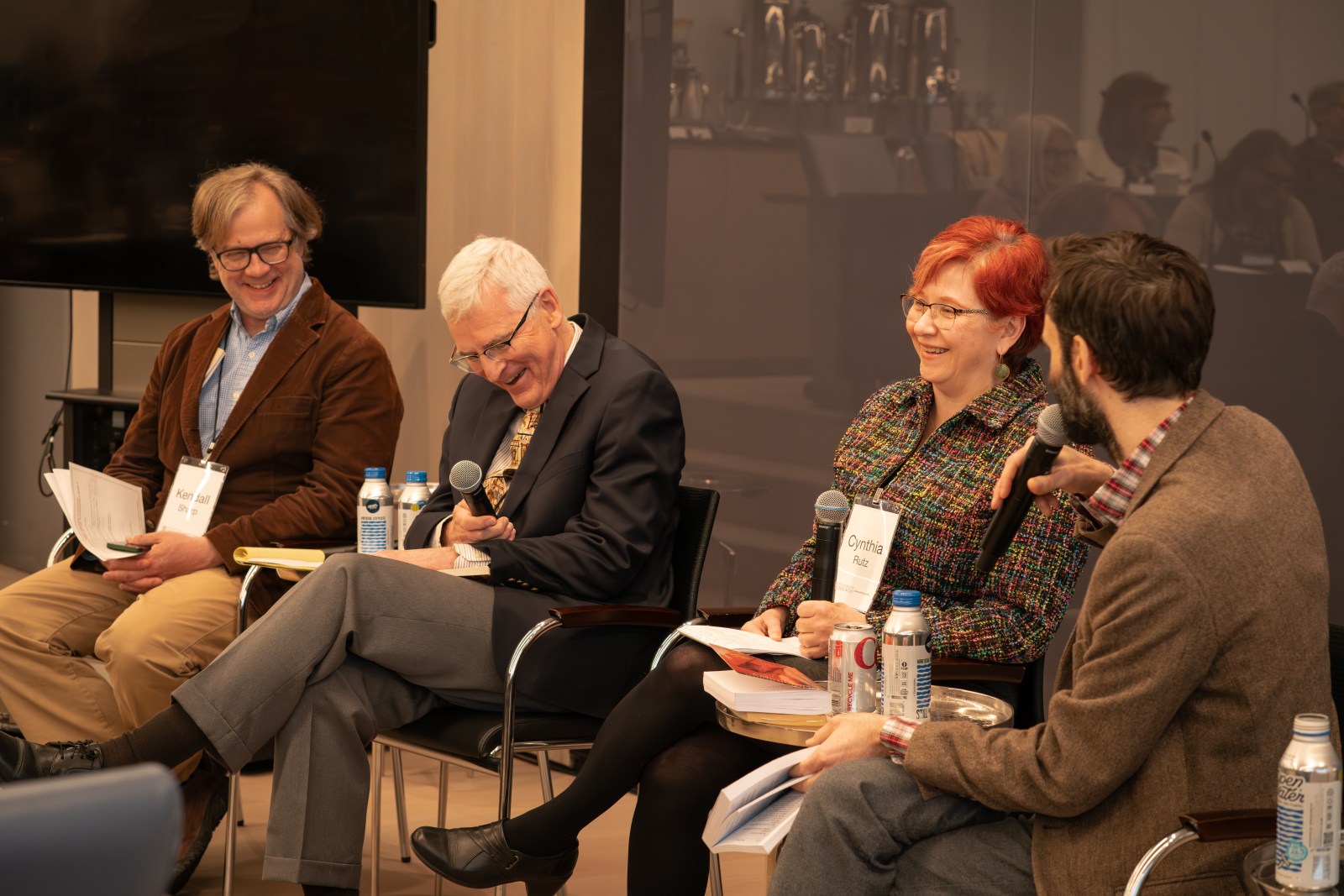
While courses in the Basic Program are anchored in Socratic dialogue rather than lectures, the Spring Symposium offered a different kind of learning experience: faculty members provided insightful perspectives on the play in lectures and panel discussions. Attendees then discussed the lectures and the texts in breakout groups and in a full group discussion.
“I was particularly pleased that we chose Shakespeare, as I have taught all 38 of the plays more than once in a three-semester sequence for the Basic Program and plan to do so again in the future,” Cynthia Rutz, Basic Program instructor and speaker, said.
Though Shakespearean dramas are grounded in distant historical contexts and stylized poetic language, they invite us into a political and social world that is like our own in so many ways. As a result, interpreting Shakespeare always entails coming to understand ourselves better.
“Our students are really good at reading Shakespeare,” Noah said. “They know his works quite well, and they always generate lively, inventive readings.”
Which Graham offering is right for you?
Fresh Looks at a Classic
Three Basic Program instructors gave presentations that examined political, military, and moral leadership in the play. With their varied areas of expertise and differing opinions on the play’s central conflicts, the presenters offered complementary interpretations and engaged in respectful debate.
The first lecture of the day came from Joseph Alulis, a scholar of political science and philosophy who has written or edited numerous essays on the politics of Shakespeare’s plays. His talk drew on history and legal theory to examine the justifications for war presented by characters in Henry V, which are founded on King Henry’s claim to the French throne. According to Joseph, the play dramatizes the challenges of a virtuous king leading a flawed regime in a dangerous world as he evaluates whether his claim is strong enough to warrant a bloody invasion of France.
Next, Noah discussed how the text of Henry V grapples with its own function as a memorial to the historical monarch’s achievements. He argued that the play is neither a straightforward celebration of Henry, the English or the campaign in France, nor a cynical attack on that legacy. Rather, Noah sees Henry as a skillful showman who creates spectacles that will enhance his majesty. Highly conscious of the stories that will be told about him in the future, the king repeatedly shifts blame away from himself, and promotes low expectations that he will exceed at crucial moments.
Finally, Cynthia analyzed three moments in the play through the lens of leadership studies. She examined Henry’s conflicts as he strives to balance his personal attachments against his political objectives. Cynthia contended that the drama is haunted by the king’s past betrayal of his old friend Sir John Falstaff, the buffoonish knight whom he disowned upon his ascension to the throne in a previous play, Henry IV, Part 2.
“I enjoyed how Joe, Noah, and I all focused on different aspects of the play,” Cynthia said. “Joe and I also had a useful disagreement about whether King Henry’s rejection of his friend Falstaff reflected well or poorly on him as a leader. The interaction with students during small group discussion and during Q and A further enriched our exploration of one of Shakespeare’s greatest characters.”
For Patricia Brichta, a special education consultant and former marketing strategy executive who graduated from the program in 2024, these lectures and the ensuing discussions exemplified the kinds of informed and engaging conversations that make the Basic Program special.
“It was wonderful to watch three instructors share humor and deep knowledge while sometimes collegially disagreeing about the text,” she said. “Such a pleasure to watch a stimulating conversation.”
Uniting a Community of Learners
Community is the core of the Basic Program’s philosophy of making lifelong learning a personal and transformative experience. In every class, students learn by exchanging ideas with the members of their cohort, cultivating insight through conversation rather than through tests or papers. The Spring Symposium extended that work beyond the classroom, gathering students. alumni, and instructors for a day of immersive, thought-provoking engagement with a common text.
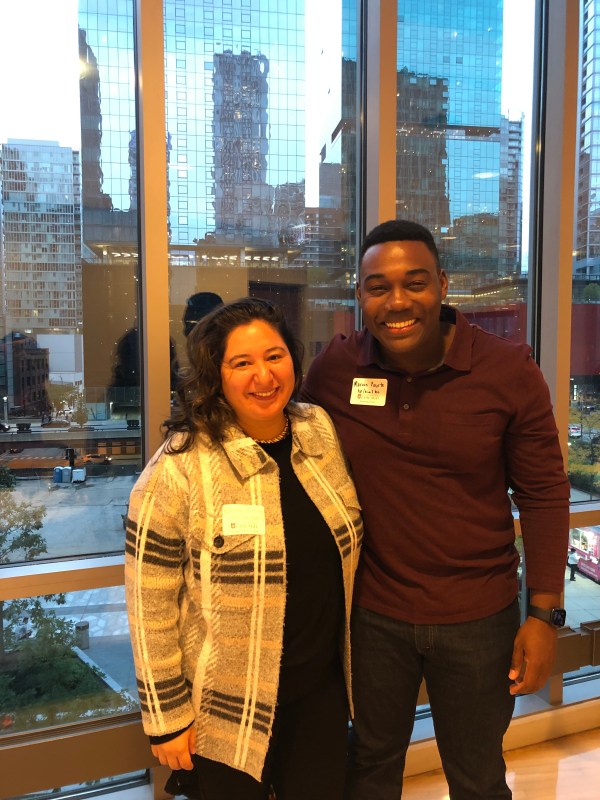
While many attendees were based in the Chicago area, others traveled in for the occasion. For several participants who took their Basic Program courses online, the symposium was their first time meeting any of their classmates or instructors in person.
“During the breakout sessions, attendees engaged closely with the theses of the talks,” Noah said. “That validated our hypothesis that the talks would provide a foundation for discussions and allow for smaller group discussion, which is deeper and more participatory than discussion in larger groups.”
In their feedback, attendees expressed how much they enjoyed not only the lively conversations about Shakespeare, but also the chance to socialize with fellow learners during meals and the reception.
“I’m always thrilled and grateful that there is a community that treasures learning in Basic Program classes and events,” Patricia said. “It is a privilege to be around other students who are intellectually curious and widely read.”
Attendees came away with a deeper appreciation for a great work of English literature and stronger connections with fellow members of the Basic Program community. Now, Noah and the Basic Program instructors look forward to building on the success of this event with a Basic Program Weekend in the Spring of 2026, slated to focus on Herman Melville’s Moby Dick.
“Before the pandemic, the Basic Program used to do a symposium every year devoted to an author or a topic,” Cynthia said. “I hope we can get back into that rhythm.”
Learn more about the Basic Program.